



gov
Power Lunch
If you think culture eats strategy for lunch, Larry Lessig adds some historical context to that whole cultural decline at Goldman Sachs thing: structure eats culture.
 15 March 2012 |
 Making Policy, Public
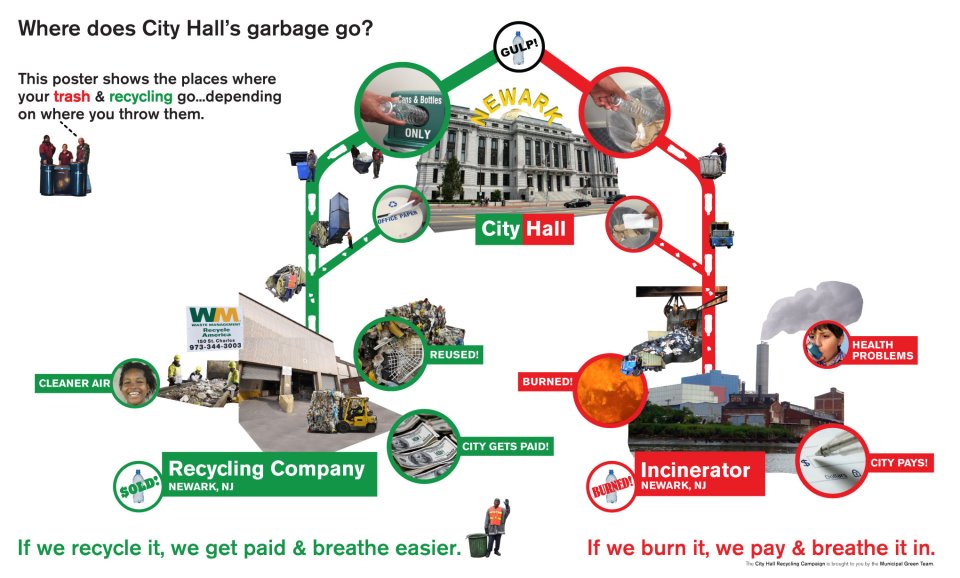
There are two places where plastic goes in New Jersey.
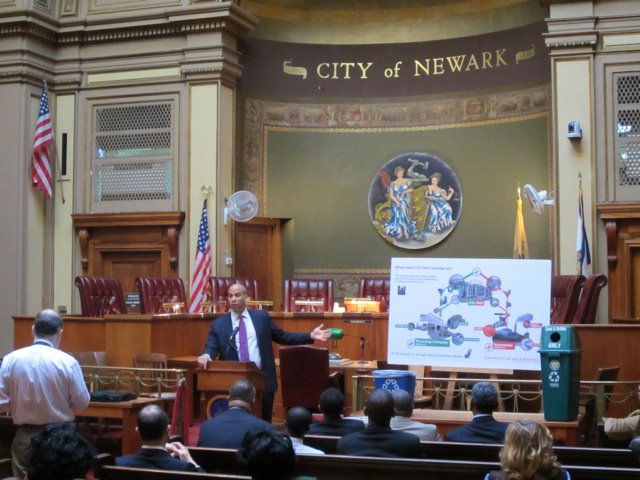
Damon Rich takes it to the bottom line and helps launch Newark's recycling campaign at City Hall in style with a lovely infographic poster "Where Newark's Garbage Goes."
Below, Mayor Cory Booker with the chart in action.
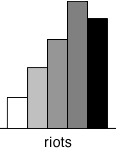 A well-timed study says yes:
 “Expenditure cuts carry a significant risk of increasing the frequency of riots, anti-government demonstrations, general strikes, political assassinations, and attempts at revolutionary overthrow of the established order. While these are low- probability events in normal years, they become much more common as austerity measures are implemented.… High levels of instability show a particularly clear connection with fiscal consolidation.… We demonstrate that the general pattern of association between unrest and budget cuts holds in Europe for the period 1919-2009.” (via) (via)
Followers and Leaders

Conversation this weekend about food trucks in New York City working to update 30-year-old laws governing street vending: though Twitter is touted as a way for fans to locate your wandering concession, it turns out that having a large number of Twitter followers doesn’t necessarily lead to more business. But it does get you a meeting at City Hall — Council members want their names Tweeted favorably to all those virtual constituents!
Building a House of Light and Wind
David Biello on the daunting physical logistics of scaling up green energy:
“It’s not just a matter of making the necessary equipment, it’s also a question of finding the space for it. A coal-fired power plant produces 100 to 1,000 watts per square meter, depending on the type of coal it burns and how that coal is mined. A typical photovoltaic system for turning sunlight into electricity produces just 9 watts per square meter, and wind provides only 1.5 watts per square meter.
The challenge is worse for smaller countries: the United Kingdom would have to cover its entire landmass with wind turbines to provide enough electricity for the current Briton’s average consumption — roughly 200 kilowatt-hours per day, according to MacKay, the Cambridge expert.”
Supply Side
On the War of the Poppies:
Myles Ambrose, one of President Nixon’s closest advisers in the War on Drugs, was scathing in his judgement of some of his fellow drug-warriors:
“The basic fact that eluded these great geniuses was that it takes only ten square miles of poppy to feed the entire American heroin market.
And they grow everywhere.”
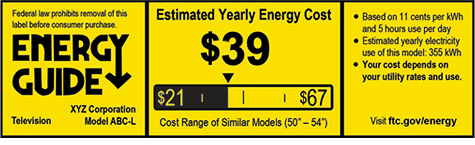
I heard the design process was quite contentious at the FTC before settling on the familiar motif. The yellow EnergyGuide label has been used since the 1970’s for washing machines, refrigerators, and other large appliances sold in the US but never before for electronics. By making long term costs visible at the point of purchase, this humble bit of information design has saved an enormous amount of resources over the last 30+ years. It’s also a nice nudge to manufacturers who know the information will be public.
The Biggest Polluter

Each year Project Censored compiles a list of 25 urgent stories that are grossly underreported. But on this year’s chilling list, the scale of this one is just staggering:
“The US military is responsible for the most egregious and widespread pollution of the planet, yet this information and accompanying documentation goes almost entirely unreported. In spite of the evidence, the environmental impact of the US military goes largely unaddressed by environmental organizations and was not the focus of any discussions or proposed restrictions at the recent UN Climate Change Conference in Copenhagen. This impact includes uninhibited use of fossil fuels, massive creation of greenhouse gases, and extensive release of radioactive and chemical contaminants into the air, water, and soil.
The extensive global operations of the US military (wars, interventions, and secret operations on over one thousand bases around the world and six thousand facilities in the United States) are not counted against US greenhouse gas limits.…
As it stands, the Department of Defense is the largest polluter in the world, producing more hazardous waste than the five largest US chemical companies combined. Depleted uranium, petroleum, oil, pesticides, defoliant agents such as Agent Orange, and lead, along with vast amounts of radiation from weaponry produced, tested, and used, are just some of the pollutants with which the US military is contaminating the environment.”
The horror goes on and on and on.
And it makes me think a lot of sustainable designers may be fighting the wrong war.
Food Pyramids
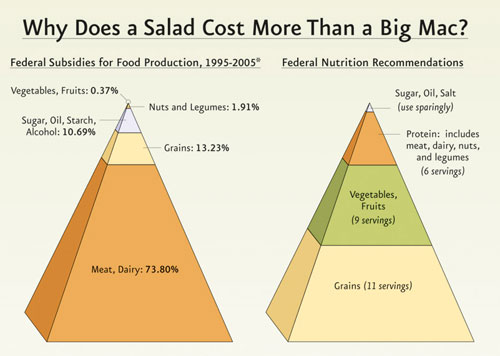
I missed this when it first hit the web, but wow, that’s a striking presentation.
The Physicians Committee for Responsible Medicine published this graphic during the 2007 debate on the US Farm Bill.
Invisible City
Why is New York City’s census count always so low? In addition some concern about a history of census abuse targeting minorities, there’s a whole host of ways people bend the rules to live here. Folks may not want to be counted if you live in off-the-books housing, with off-the-books tenants, or do off-the-books work for a living.
And though immigration is a perennially hot-button issue, I wonder whether this latest flare-up has more to do with mid-term elections or suppressing counts (thus money and power) in non-white districts where Democrats tend to lead.

