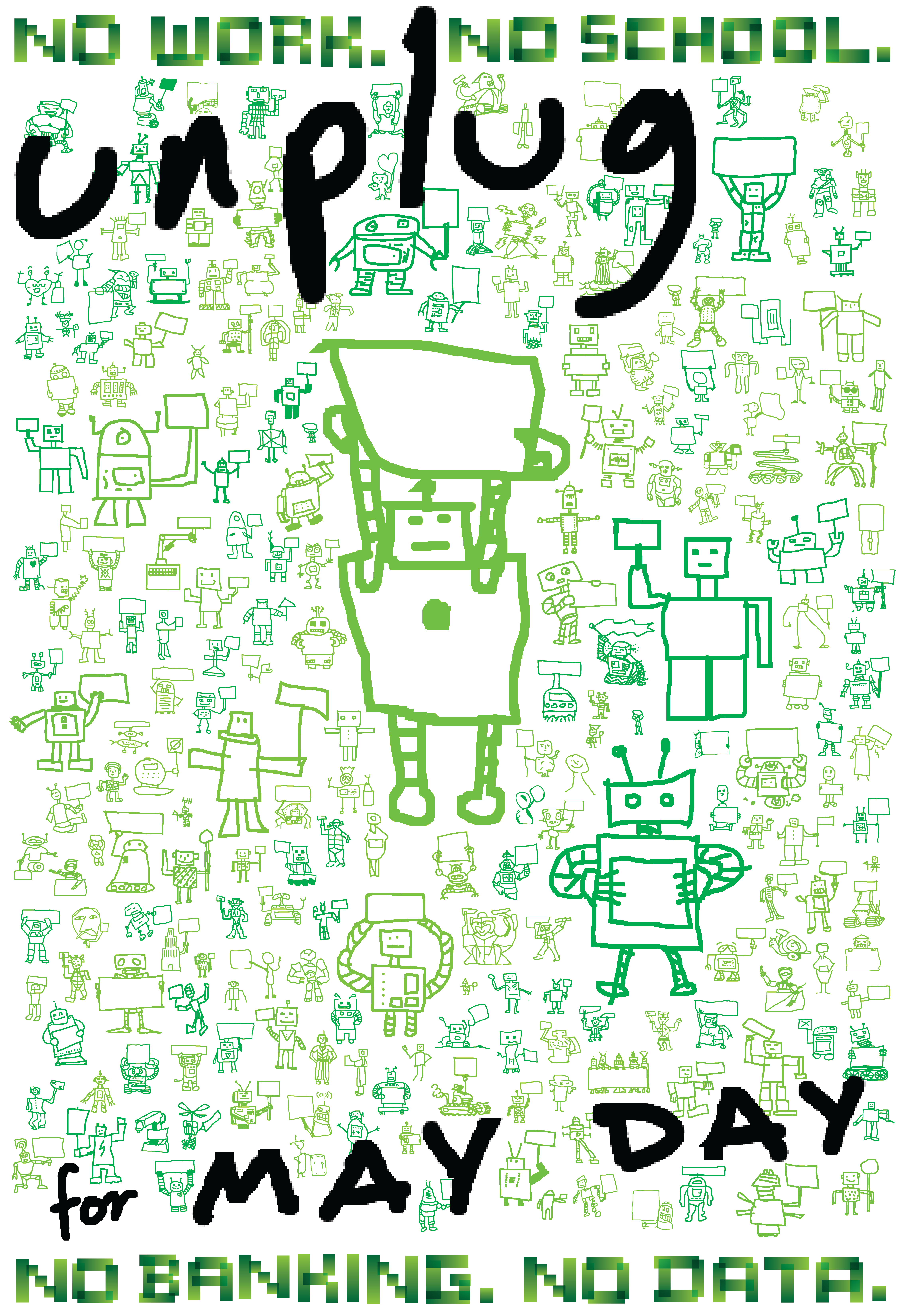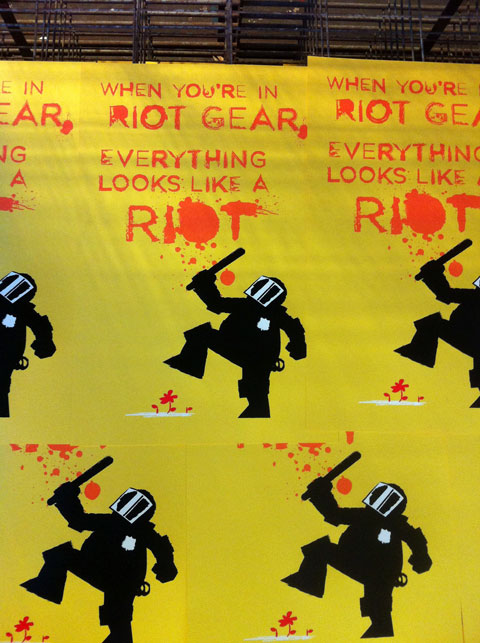
Visualizing Information for Advocacy: An Introduction to Information Design is a booklet I wrote and designed to introduce advocacy organizations to basic principles and techniques of information design. It’s full of examples of interesting design from groups around the world in a variety of media and forms. It has tips, excercises, and even recommended Free Software packages to help polish up your graphics.
I worked with the Tacitcal Tech collective who provided editorial feedback and helped track down reproduction rights for the images. They’re also coordinating printing and distribution to NGOs. The project was funded by the OSI Information Program. The booklet is Creative Commons licensed.
Download the full booklet at http://backspace.com/infodesign.pdf

Traveling for the holidays? It’s always disturbed me that U.S. hotel rooms always seem to stock a Holy Bible. Nevermind any other tradition, or say... The Englightenment. This year, I’m packing something of my own to leave behind: atheism cards! Each of these cards has a quote I think might sow a few seeds of dissent or perhaps start a long distance discourse. I plan to leave one inside the front cover of each bible I meet. Click the image below to download a printable PDF. Or make your own. There are plenty of choice quotes here and elsewhere.
An article of mine is running in the
Communication Arts August Photography Annual 2007. The dialog format is a bit different, so I’m curious to see how it’s received. It started out as a rebuttal to many things I’ve heard other, sometimes very prominent, designers say about why they eschew political engagement. Many of the points started as blog posts here. Thanks to Jamie, Adam, DK and Acacia for their feedback on the draft.
Late afternoon at a sunlit café on a high traffic street. Young faces stare intently at their laptops while the smell of roasted coffee and beat of a down tempo groove fill the air. Cups clatter on white modernist tables amidst laughter and the buzz of machines grinding beans. The coffee menu reads much like today’s headlines: East Timor, Guatemala, Ethiopia, Rwanda, Colombia.
Bells on the door jingle as Robin walks in. Sam looks up from a bright orange couch.
Sam: Hey! How’s it going? How are you?
Robin: Excellent. You? How’s business?
Sam: Really good, actually. An identity design we did just got a big award. So that’s nice. What’s new with you?
Robin: Things are good. Let’s see… A poster we did helped turn out nearly a hundred thousand people to that protest last week.
Sam: Whoa! How’d you get involved in that?
Robin: I just heard about the march and got in touch. It was a chance to do something for a cause, something the studio believes in. And, honestly, it was an interesting design challenge.
Sam: Sounds great. But do you ever feel conflicted? I mean, look at those posters about the genocide in Darfur. I’m all for rising to the challenge, but don’t these thing just take advantage of the cause by exploiting some tragedy as an excuse to make a clever design?
My 2005 research An Introduction to Activism on the Internet was featured in the November 27 “Recommended Reading” column of the Wall Street Journal. Katrin Verclas, executive director of the Nonprofit Technology Network, picked thirteen on- and offline resources for leveraging technology for social change. About my document, she says:
“John Emerson’s guide covers strategies and techniques of electronic advocacy using email, the Web and other new media to bring about social change. It provides a great overview and analysis of campaigning methods.”
See for yourself at http://backspace.com/action. Thanks, Katrin!