



memory

Myths and Movements
From Big Books and Social Movements: A Myth of Ideas and Social Change (PDF) by David Meyer and Deana Rohlinger:
“Mythic accounts shorten the incubation time of social movements and omit the initiating efforts of government and political organizations. The myths develop and persist because they allow interested actors to package and contain a movement’s origins, explicitly suggesting that broad social dynamics replicate idealized individual conversion stories. They also allow actors to edit out complicated histories that could compromise the legitimacy of a movement or a set of policy reforms. These mythic accounts spread and persist because they simplify complicated social processes and offer analogues to the individual process of becoming active, but they may lead us to misunderstand the past and make misjudgments about collective action and social change in the future. We consider those implications and call for more research on the construction of myths about the past.”
It should be no surprise that nuance is lost as histories become narratives become myths, or that interested actors construct stories about past events to serve their current purposes. But then while simplified myths can be useful rallying points, I’m surprised how often some movement clichés come up — and how hard they are to dislodge.
 26 October 2012 |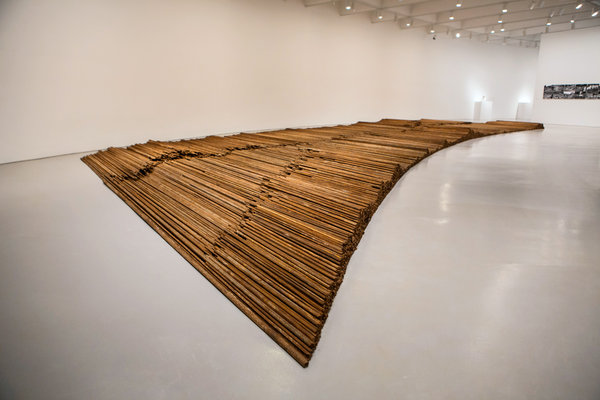
Via NY Times on Ai Weiwei
The End of Print
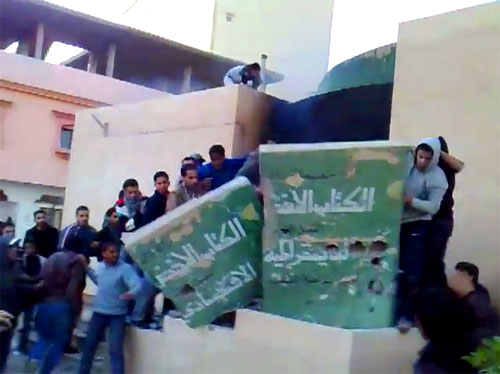
Few visuals capture the spirit of regime change as much as toppling the monuments of the previous regime. In the case of Libya, revolutionary protesters on YouTube topple a monument to Muammar al-Qaddafi’s revolutionary Green Book.
The future is unwritten!

